Tuesday, November 19, 2024

Pro-Life, you say...?


Here’s a crazy idea for the pro-life movement - hear me out on this. 


What if, instead of stigmatizing and systematically penalizing some pregnancies and births, we lionize ALL of them? I mean if you're gonna use the term "pro-life," more life is intrinsically better, right?


Pregnant at 17 out of wedlock? Congratulations! You’re a hero of the species! Thank you for your service! Here’s your award check, and access to all the support programs you need, free of charge, to continue your education and/or career during your pregnancy. In addition, all medical costs are totally covered at no cost to you. You will be entitled to a scholarship to college, and a study program specifically crafted to allow you to prioritize your pregnancy without sacrificing your education. I mean, we do as much for potential pro athletes, how can we not provide for a future progenitor of humanity?


Should you decide to raise the child yourself, you will also receive a childcare and support annuity, up until the child reaches 18 years of age. And remember, full job protection and family leave availability are in place by federal law. Public school will be fully funded and high-quality. 


If you choose not to take on the role of parenting for whatever reason, adoption is still provided and supported as an option, with numerous publicly and privately funded programs available.


Of course, if for medical or other reasons you do decide to terminate your pregnancy, you are free to do so. Everyone’s situation is different, and carrying a pregnancy to term may not be possible or reasonable for you physically or psychologically, and it is your body. But we hope that we have at least removed the social and economic barriers that would have made the choice to carry to term onerous for you. 


Again, congratulations on your opportunity to contribute to the next generation of humans! We hope the experience will be joyful for you, and we are there to do everything in our power to make sure that happens.

Thank you on behalf of the human species!


Unless of course, the whole point is to control sexual behavior through exclusively burdening people who can be pregnant… oh that was it? Ah. Well then up yours.

Thursday, September 28, 2023

The first step...


Hi everyone, my name is Jaeson, and I'm a musician....
 
[Hi, Jaeson!]
 
Okay, so, uh, this is my first time sharing, sooo... I guess it all started when I was about 12 and started listening to AC/DC, and I was kinda hooked. I got my first guitar at 13.
 
[man, I started young too...]
[yeah, me too...]
[yeah...]
 
I started my first band at 15, and we played - like, a lot. We used to do shows at clubs in the city until like 2am sometimes. That went on until I was about 24, when my band mates kind of grew up, I guess, and got adult lives and jobs and stuff...so I had nobody really to enable me anymore...
 
[makes all the difference, man...]
[sometimes that's all it takes...]
 
So I sort of grew up after that too. Got a good job, got married, started a family, real respectable adult stuff, y'know?
 
[Good for you!...]
[Yeah, sounds like you made it, right?...]
[You survived, man!]
 
Yeah, well that lasted a long time, like a good 25 years. I mean, I'd play a little...[ooooh...!]... I- I mean, just a little, now and then, to kind of relax, y'know? And it was like totally under control, I thought...
 
[Yeah, you think you can play just a little, right?...]
[Oh, I been there too...]
 
Then I started writing again though. And I just, kinda...kept doing it? It felt pretty good, and honestly, it - well, it still does. And I kinda don't wanna stop now. I mean, maybe I don't have to?
 
[silence....]
[Hey man, I gotta be honest, it kinda sounds like you're not ready to give it up.]
 
Yeah, maybe you're right... maybe-... maybe I won't!
 
–To Be Continued...–

Thursday, May 18, 2023

What Money Is

AI-generated image of a bag of cash dripping into an IV leading to a megaphone spewing lightning
Longer ago than it flatters me to mention I had the privilege (not fully appreciated by me at the time) of taking a class on Metaphor taught by George Lakoff, American Linguist and Philosopher, and then-time Professor of Cognitive Science and Linguistics at UC Berkeley.

Full disclosure, I did not do well in that class (I think I thought it was something else when I signed up, honestly), but what I did manage to get out of the course, and have retained over the years as a core pillar of how I think about pretty much everything, is the concept of Ontological Metaphor.

An example is “Time is Money”. We’ve all heard this one so much it doesn’t even feel like a metaphor anymore, though obviously it is. What makes it an Ontological Metaphor is that it shapes not only how we talk about the target (“Time”), but how we THINK about what it means, and even what it is. In this case, time is reframed as a resource that we interact with in exactly the same way as money — we spend it, save it, invest it, and often waste it.

Or we think we do, anyway. How exactly does one “save” time? You tell me — I still live paycheck-to-paycheck where time is concerned.

Funny thing about metaphor though — it’s capable of infinite regress, where one definition simply leads to the need for another and so on — the “turtles all the way down” effect. For instance, if Time is Money, what is Money?

I should say here that the reason I failed Dr. Lakoff’s class (I think) is that rather than observing and documenting ontological metaphors in culture, I had a tendency to cobble them together myself, which was really, really not the assignment… but it seems after all these years I still can’t help myself. So here are a few scaffold ontological metaphors for money that I would like to share.

  • Money is Power
  • Money is Freedom
  • Money is a Score
  • Money is Speech
  • Money is Blood

Money is Power

This one is as straightforward and utilitarian as it gets. Money is a way of acquiring and doing things. It enables one to take action in the world. The more money you have, the more you can do.

I want to scuba dive. Do I have the money for gear, and travel? Yep. Off I go. Hello, deep blue abyss.

Money is Freedom

There’s a colorful phrase some people use — ‘ Fuck-you’ Money (where the expletive modifies rather than addresses the subject). Impolite, yes, but very clear. It’s having enough money that you do not have to care what anyone else thinks. It’s an expression of total freedom to act as you wish. The more money you have, the freer you are.

Power and Freedom are really closely related, but not the same. When you have power, you can do something. When you have freedom, no one has the power to stop you. I have the power to break my neighbor’s window, but I am not free to do it — I will face consequences if I do.

Money is a Score

Think of the Elon Musks, the Jeff Bezoses, the Jamie Dimons, and the Larry Ellisons of the world (recognizing that even within this set there is a vast amount of distance). Think of the Forbes 400. This is where money is basically not just a sport, but an fairly intense spectator sport. Such lists are always — always — ranked, and people follow the standings in real time. The more money you have, the higher your score and thus your position in the standings.

When money is a score, the utilitarian value of capital is almost completely eclipsed by the game.

Money is Speech 

In America and much of the rest of the democratic world, there are actually two ways for people to express their will as regards government — voting, and campaign donations. When it comes to actual literal voting, it’s pretty straightforward — everybody gets one (in theory). Not so with money. While there are some (pretty easy to circumvent) rules that limit this, ultimately in American politics, a dollar is a vote — and in this sense, corporations (which are not people) get to vote too. A dollar is a vote — and the more money you have, the more of those votes you get to cast.

The size of a candidate’s “war chest” (oh, so many, many metaphorical paths we will not go down…) is taken as a huge predictor of election success, and it is one of the things that keeps us trapped in a limited, two-party, lesser-of-evils world when it comes to selecting our leaders.

This one out of all of them personally enrages and horrifies me, by the way, and is one of the main reasons I sat down to write this.

Lastly, and this is the Metaphor I Live By (thank you again, Dr. Lakoff)…

Money is Blood

In the body, blood exists to move around. It carries resources to, and removes waste from, all of the various parts of the body. Cut off blood flow from a part of the body — a limb, a digit, the brain, even a single cell — and that part dies. Concentrate too much of it in one place, and it gums up the whole works by becoming a clot (blocking the flow of blood to places that need it) or a hemorrhage, releasing it to places where it does no good because it’s no longer part of the effective circulatory system (this is one you hear a lot — “hemorrhaging cash…” or “bleeding money”).

In this construct, the more money you have, the more responsibility you have to keep it moving to the places it needs to go.

Which is right? 

That’s the question, and perhaps not surprisingly the answer I hold is “all of them, and none of them.” Metaphors are a way of sense-making, not proving. Any and all of these (and more besides) can be useful in making sense of what money is and what it does, but what’s important is what those interpretations lead us to value and do. Power and freedom allow us to meet our goals and realize our desires. Games are for winning and losing (at least those involving scoreboards). Speech is for listening and being heard (preferably in that order). And blood is for keeping organisms alive. The point is not to suggest that one of these is more true or more beneficial to the others. 

The point is to recognize which of them you inhabit at any given time, and what that does to how you view and act with regards to money, and with regards to people who have more, or less of it. No one would suggest that it is wrong to take blood that is pooling in the heart and redistribute it to the left pinky toe which does basically nothing. Nor would many suggest that fraud has occurred when dead people and people who do not exist (by way of estates and corporations respectively) cast votes with their dollars. 

Whatever metaphors you hold for money, one thing that it literally is is a fiction. A shared and agreed-upon one, to be sure, but a fiction nonetheless. That makes it even more flexible in a metaphorical sense, which we employ when it comes to our understanding of it, our habits around it, and ultimately our ethical treatment of it. If money itself becomes a proof point and a foundation for our decisions, those turtles we are standing on start to fall pretty far and pretty fast.


Cross-posted at Medium - https://medium.com/@jaeson.paul/42b5e6cac979


Saturday, August 13, 2022

Parable #1, wherein a young man has a heavy burden

A picture of a young man carrying a huge pile of bricksThere was a young man walking down a road, pulling behind him a wagon loaded with 1000 bricks.  His feet were bruised and blistered. With each step, the young man groaned and sweat dripped from his brow, and the wagon moved 10 inches. 

One morning an older man saw him and was moved to pity. 

“My son, you are so burdened. Let me carry some of your bricks, that you may be eased in your task.”

The young man agreed, but said “sir, you have labored longer than I. I will gratefully accept your help, but please only carry two bricks.”

The older man then climbed onto the wagon, to find the two heaviest bricks. He hoisted them up onto his shoulders. The weight was all he could bear, but he lifted them up and sat down atop the pile on the wagon. “These are so heavy,” said the older man. “Even these two must lighten your load.”

The young man again began pulling the wagon, his pain and effort increased by the old man’s weight. The old man did not weigh much compared to the bricks, so the young man continued to pull. Now, with each step, the wagon moved 9 inches. 

“My, you must be so tired and weak!” said the old man from atop the wagon. “Even with my help, you are slower than before! Must I carry even more?” And with that he picked up two more bricks. 

The young man’s pace was unchanged. The old man, astonished, picked up two more bricks, saying “you need me more than you ever knew! I will carry more, though it breaks my back to do it!”

The older man indeed was heavily burdened, and he shook and sweated under the weight of the six bricks. He groaned and strained, the cords of his neck standing out. Still, the young man’s pace was unchanged. 

Presently they came upon a well beside the road. 

“Sir, you grow weary,” said the young man. “Put down your load awhile, and let us both rest.”

The old man let down his burden and climbed down. They rested together and drank some water from the well. When they had rested, the young man stood and returned to pulling the wagon. 

“Wait!” exclaimed the older man, “you need me! You could barely manage even with my help!”

“Sir, please do not trouble yourself. You have worked hard with me, but it has not made my task easier, and it tires us both.”

The young man continued with the thousand bricks. With each step, he moved 11 inches. 

The older man, standing behind on the road, said to himself “what an ungrateful young man! He will surely fail without me!”

The young man continued on his way. 

Thursday, May 26, 2022

Again

 Again. 

An adolescent human being acquires an instrument with one sole purpose, killing other human beings. At some point either before or after that, he formed the intent in his mind to actually do that very thing - and to target children in a setting where they should be as safe as anywhere they could be. In this case, he made this intention known ahead of time, publicly, via social media - so it seems we can assume that his plan did not include avoiding detection in order to make success (whatever horrible definition of success was in his mind) more likely. The act itself is as utterly inexplicable as it is horrific, and while I firmly believe that while there are no evil people, there are evil acts. This was evil, if there is anything that can be so called.

The response to it is maybe even more confounding, if predictable. There are those who say the answer is to increase the number of firearms by arming teachers, or putting more armed guards (police, private security, it hardly matters) on campus - even the idea of putting "man-traps" in schools, literally booby-trapping schools. And we used to think it was a problem that kids pulled fire alarms.... 

I have a pretty strongly-held opinion about whether more guns would equal less violence, but I don't even want to go into that now. I want to think about the shooter, and what it means that a human being made such a tragic choice. Not to forgive or excuse - there is no forgiving or excusing an act like this - but to recognize just how and why I am sure this is not the last time.

There's a lot of attention being placed on this kid's (and he was a kid, I don't care if he was 18 or 23 or 12) recent social media posts - "we're looking at his recent history" is what they are saying–the proposition being that the clues to what caused him to carry out this act and the signals that could have been detected to stop him could be found in the days and hours immediately before that moment.  

There's also a ton of speculation about his mental health, again basically at the time that he made the terrible choices he made. Was he mentally ill (whatever definition of that you want to work with)? Did he have some kind of episode that caused him to "snap?" 

What no one seems to be asking is what social world he was in, or felt himself to be in. How does someone become so detached from his own humanity that he is unable to recognize that same humanity in the victims of his actions? What had caused this person to view those kids, those teachers, even his own grandmother (whom he shot as his first act in this chain, also pre-communicated on Facebook), as so fundamentally separate in substance from himself, and he from them, that he could not only conceive but actually carry out such an act? 

Since he is dead, shot in the classroom he had barricaded himself in, it's not likely possible to know the answers, but I can't help but think they are not to be found in the minutes, hours, days, or even weeks immediately leading up to that moment. Forget about his last post - look at his friends list. Look at their posts. Look at who's NOT on that list. Somewhere in there, this person became so utterly and thoroughly "other" that he did not see or feel the value of those 21 lives, or his own. That doesn't happen all at once. It's not because he was part of some group, or listened to some particular message, or had some particular illness or defect. He was detached. Disconnected. Ignored, or overlooked in general. He got separated somehow, and nobody noticed, or managed to bring him back in.  And now 19 kids, two teachers, and he himself are dead, and everyone around all of them are traumatized and scarred forever. For nothing.

Like I said, if anything is evil, this is. 

Somewhere along the way, this kid was recoverable. Now none of them are. It took 18 years to create  the evil that would only need minutes to destroy so much. When we decide to let go of anyone, to let them drift off into otherness, when we cast off and discard a person, a group, a class of people, we create exactly the conditions needed for evil to grow and fester. I don't think I've ever used the word "evil" this many times in one post. But this is what it is. When all connections are severed, and all value is discarded, that is all that can result.


Monday, March 8, 2021

Digital-Savvy vs. Digital-Jaded

Publication date edit to reflect date of actual writing. Posted much later on 6/24/2022.
 
More and more I find myself sounding like a digital luddite…
“goddammit, it’s making me log in again - crap, I don’t know the secondary password…where’s the freakin’ setting again?...gah! Can’t I just turn on the TV and watch something?!?!”

I used to be a digital convert - evangelist even. The Internet was new when I was in college, and as soon as I had access to it I jumped in with both feet - spent all our wedding money on a computer, learned to code HTML when tables were a new thing, learned JS and CSS and how to work between them, learned ASP, even freaking Netscape LiveWire… taught myself how to administer servers, the whole thing. I was full-stack, man!

Now I’m kind of burned out on the whole thing, and I sound like a caricature of everyone’s grandpa trying to use a laptop. I get WAAAY too pissed off when I'm asked for yet another password - or even MFA!! - when I'm just trying to watch TV or play a stupid Playstation game. And how many different ways do I have to sign up for HBO Max, then have to remember WHICH WAY I did it originally, just so I can actually RELAX my brain for a couple hours... FUCK you, Internet!!

Meanwhile, my own parents are digitally fluent, as are my in-laws (well, to be honest, in both cases it is actually the moms who get it more than the dads, so maybe there’s something to that too…)

We still talk all the time about “older, less tech-savvy users” - I wonder if that’s a myth at this point? Maybe we’re seeing the “tech-jaded” group start to become more important? I am by NO means "not tech savvy" - hell, I was part of making this whole mess back in the 90's! But I am absolutely part of the Tech Jaded submarket. The good news, I guess, is I'm in a position to speak for us in my role as a digital product strategist type person. The bad news is nobody really wants to hear it because "I'm not the target audience" - which is totally true, I totally get the whole don't design for your own opinions thing.

But I can't be alone on this. Does anyone else resent the degree to which we've turned over our lives in the supposed service of creating convenience, only to be asked to perform these stupid little tricks for the digital overlords we've created for ourselves?

TechnoLord: "What's the password, little doggy?"

Puny Mortal: "arf!"

TechnoLord: [secretly comparing "arf!" with "Arf!!"] ...

"Oops, it looks like you are not you after all, you're going to have to reset your password in one of three or four possible different ways, only one of which will work, and we won't tell you which, before you can be trusted to watch John Oliver this evening. Good luck!"

Puny Mortal: [begins to gnaw nervously at loose skin on forelimb...]

I think it's time to join a Special Interest Group, but I'm not sure I have the patience to set up the account.


Monday, February 1, 2021

An Educational Disservice, However Small

Publication date edited to reflect date of writing. Posted here much later on June 24, 2022

 
I’ve been watching a lot of things happen over the past few years with my kids and the education system. Let me first point out with full transparency I am NOT the most involved parent in my kids’ schooling–though I’m probably somewhere north of the median point, there are people way more knowledgable and involved than I when it comes to district politics, budgets, curricula, etc (which is not to say I don’t have opinions about every one of them, just not superlatively informed opinions). I mean, I’ve done stuff - I sat on and at one point presided over the SSC, I’ve been on the PTA, and I’ve built a pretty long list of carnival games for various fairs and festivals. I am however no authority when it comes to education as it is organized and carried out in our district, much less our country.

I want to share this one experience, from my own growing up. It was sometime in elementary school, fairly early on though I can’t remember exactly which grade. We were given a quiz on the difference between “fact” and “opinion” in which we were given a bunch of statements like “Chocolate is better than strawberry ice cream” (opinion) and 
“Chickens lay eggs” (fact). You probably encountered something like this at some point (though maybe you wouldn’t know if it came up in the educational experience of some of our political leaders but that’s not the point today). Moving on…

One of the statements on this quiz was “There are a million stars in the sky.” Growing up as I did in a post Carl Sagan world, I KNEW there were WAY more than a million stars (possibly depending on your definition of “the sky” including just what you can see from your particular position on Earth, and “stars” meaning just those that you can see as a point of light…but again, not the point).

This one bugged my little pre-adolescent self, because it was neither - it wasn’t an opinion, or a fact! An “opinion” in the context of the discussion we had all participated in was defined as something you or someone else thought, that someone else might disagree with, and neither of you is technically right or wrong - it’s just your opinion based on what you like, dislike, value, etc (e.g. “baseball is fun”). But there were only two choices, and I had to answer the question…so I decided that classifying it as an “incorrect fact” made more sense than calling it an “opinion” - since you could prove that there either were or were not “one million stars in the sky” by some objective process, however impractical. So I chose fact. The teacher’s response - almost certainly from the back of the teachers’ edition of the workbook from which the quiz was taken, was “incorrect.” 

I am still kind of angry about this, especially in the context of the current era of "alternate facts" in which we live. "The Election was Stolen" is not an opinion, it is either true, or untrue. People are entitled to differing opinions, after all - but the truth or falsehood of an objective, external reality is not something we can just choose on preference. "Pi equals 4" is also not an opinion - it's just wrong.

Somewhere back there in the Department of Education, someone made a bad choice for a rudimentary lesson in Epistemics, and dammit, I still feel cheated.

And people wonder why we're losing our abilities in critical thinking.
 
Back to my original point - I think it's high time we started actually valuing Philosophy in education, in all grades. We're raising kids who can execute knowledge tasks, but who cannot examine their lives or the world they live in. They believe things because they were told them, and were rewarded for remembering them - but they don't know how to evaluate what it means to actually KNOW something, or how to think about WHY ethical decisions matter and how they are made.  No, it won't get you a better salary (in our current society). No, it won't always get you happy looks and approval. But if all we raise our kids to do is produce, repeat, and obey... I worry that we're headed to an unpleasant future. 
 
By the way - the unpleasantness of such a future is indeed an opinion. Whether or not it happens that way will be a fact that we just don't have yet.


Monday, August 31, 2020

The Dangerous Power of Examples

 Updated publication date to reflect actual time of writing. Posted much later on 6/24/2022. Also lightly edited to remove a redundant paragraph from the original. Note that as of this posting, the video is still live and accessible.

This video is getting a lot of attention on FB and Twitter and probably other places right now. 


I saw it on Facebook (don’t start with me, yes I do keep that window on humanity open). I even broke my usual pattern by taking the bait and commenting on it. 

I’m going to go through my best recollection of how I experienced this and how I reflected on it. Recall and self-reporting being the untrustworthy witnesses they are, take it for what it’s worth.

First, I saw the intro frame and the accompanying headline “Is this noncompliance?” and knew I was going to see a white guy get away with some egregious behavior towards a cop. So now I’m already primed - by the way, my own decidedly liberal worldview has also primed me very specifically on this over the past few months. So I play it - first without the sound because I’m home with the kids and don’t know what it’s going to be. I see the lone white cop, gun out, and the large white man next to the large black pickup. The two are not happy with each other. 

I decide I need to hear what they are saying. “Fuck you, you stupid fucking pig!” repeatedly features pretty prominently, as ultimately does “you point your gun at me in front of my kids, I’ll fucking kill you!” (Yes, he does literally threaten to kill a police officer - to his face, during a heated altercation). The officer  - alone, mind you - stays in control of himself, and repeatedly asks for the man’s ID. The female passenger of the truck gets into it briefly too… Anyway, watch the clip if you want to see it. You don’t need a play-by-play from me. 

Also relevant is what’s not shown:
  1. What led to the officer pulling his weapon - The clip starts when it’s already reached that point.
  2. The outcome - the clip ends with the officer still at the driver’s door, which is still open (the driver appears to be closing it). 
I can only assume that the most important outcome - nobody got shot - is what actually happened. There is no mention of injury to the officer or the driver of the pickup, or to any of the passengers. Hopefully that is not simply an omission.

Why talk about this? There are countless clips like this, and even more dramatic ones at that. We’ve all seen them.  

Here’s how I felt myself respond, again to the best of my remembering. 
  1. If that guy had been black, he’d be dead. I’ve said it a million times when seeing footage of the outrageous behavior of armed white people in public places. 
  2. You know that guy has at LEAST one gun in that truck. It was a big dude, with a big attitude, in a HUGE truck, apparently in Washington state (or so said some of the comments). I imagined the bed of that truck was no stranger to deer carcasses - which I'm not against, but again, "weapon visible in the car" is a pretty common determinant of outcome in these situations.
  3. How can anyone see this and still dispute white privilege? See points 1 and 2.

Looking at my response above, it is unfair and unfounded in all three points. 

Point 1 is unfair to the officer. Assuming he would have pulled the trigger on a black person in the same situation does him a disservice, when clearly in that situation he seemed, by what was captured in the clip, to handle himself and the situation with admirable self control and emotional maturity - certainly compared to the driver (whose behavior was reprehensible). If there is ever a difference in the maturity level between an officer and someone they are stopping, I would hope that the balance always tips in the direction seen here.

Point 2 is unfair to the driver - who again, was behaving horribly, presumably in front of his kids. But there is no reason to assume he’s a gun-toting vigilante, even if he is a hunter (which we also don’t really know - that truck does look pretty clean, after all). Also having a gun pointed at you can have a pretty strong effect, particularly if say one is a veteran or has some other past trauma coming to bear.

Point 3 is unfair to anyone who is honestly trying to parse through and make up their own mind about things, with nothing but particular incidents and individual anecdotes to work with. If we are asked to have an opinion and make a judgement about individuals in a concrete situation, we should have all the facts - and we don’t.

Now, I DON’T need all of the individual details of each case one by one to tell me that there is a strong pro-white bias operating in our policing, justice, and economic systems. A disparity like we can all see readily in outcomes makes the truth clear. You can either judge that one population - black and brown people - simply tend to make worse life choices inherently than white people, or you can judge that some combination of systemic factors - and they may be many and self-reinforcing at multiple levels - is in operation. The outcome of a function is always due to input conditions (the populations) and the function itself (the operations, however complex, carried out on those inputs). 
 
But again - critical thinking is critical (it's right there in the name, people!) when examining anecdotes, examples, and clips that "go viral" - no matter which opinions we hold. If we feel our opinions being immediately and strongly validated by an example like this, THAT is when we should ask questions.

Stories are way more powerful than data when it comes to influencing people, precisely because they make the abstract concrete and personal - and thus emotional. Emotions aren’t bad - we should all feel happy that nobody gets killed in that clip, and we should all feel outraged when ending a life is the solution chosen to resolve a conflict. 
 
All that said, emotions and confirmation bias should not be the foundation for judgement in any individual case, especially one making the rounds on social media.


Thursday, June 4, 2020

It's Time to Tell This Story

Today, my friend Phil shared a very difficult personal story. It was painful to read, and I won't reproduce it here because it isn't mine. But it showed me how important it is to post this, now.

Here’s my story. It isn’t great.

It’s an early summer evening in West Oakland in the mid 1990’s, in an old steel workers’ union building that was converted to living space, across the street from Acme Galvanizing and the Roadway truck yard.  The neighborhood is known for the abandoned and often burned-out cars that lined its streets, and the disused sports field where locals would gather to train pit bulls - to fight. Smash-and-grab theft was common. The house next door had a vicious german shepherd tied up, that would try it’s level best to get over, under, or through the fence to maul anyone who it didn’t know. 7-8 tenants in 3 households, all in their 20s and 30s and all of whom happen to be white, are having a cookout in the shared courtyard and parking lot, encircled by 9-foot cyclone fencing topped with razor wire.

The sun is just about setting, and a young man, same age as the tenants in the building, approaches the gate and rings the doorbell. Everyone looks up, and one guy - punk-rock wannabe kid in a flannel with a mohawk and Doc Maarten boots - turns to look. 

“No man, get lost - we don’t have any bottles, man!” 

The guy at the gate asks “What? what bottles are you talking about?” He looks confused, but somehow not completely surprised. 

“Whoah, Whoah, no…he’s cool! That’s our friend, Maurice!” says one of the other tenants, jumping up to clear up the confusion and let the other guy in. 

The guy at the gate is black. The punk kid…is…well, me. 

I could make a lot of excuses. Some of them would be kind of convincing. 

They Do Not Matter.

I saw a black face at my gate. And my first instinct was to drive them off. 

That Matters.

My bias drove my actions that evening - unconsciously, unthinkingly, and incredibly quickly. 2 seconds would have been enough to see from the guy’s clothes (shabby-but-fashionable for the time, honestly very much like what the rest of us were wearing) that he was not a homeless man looking for recyclables. One word would have been enough to make clear that this was not an intruder, but an invited guest - I think he had even brought a bottle of wine, for pete’s sake! 

“Get lost, we don’t have any bottles for you…”  Welcome to our home.

The fact that I felt like shit immediately doesn’t absolve my actions. The  rest of the evening during which Maurice and I got on fine and had a friendly conversation doesn’t mean it’s all okay. At the end of the night we shook hands, and smiled at each other, and each of us pretended it was no big deal…but yes, it was. It really was. 

Because I know this is the shit that causes racism to continue to hold power in our society. It’s not white-power torch-wavers, or goose-stepping neo-nazis, or idiots in hoods and robes or dicks in suits wearing pins of Pepe the Frog and flashing “WP” signs. Those things are bad - horrifyingly bad.  But they’re also very easy to point to and say “well, see, THAT’S a Racist - not me!” 

This kind of overt hate, in addition to the direct harm it causes, keeps white people like me blind to the harm that we do. It provides an easy piece of cover for the subtle biased attitudes that really do allow racism to flourish in safety. Being just a little more likely to call the cops when a black person is “hanging around the neighborhood,” or being just a little more “careful” when in a “black part of town,” putting up razor wire and bars on our windows, or saying things like “I don’t understand why they tear up their own neighborhoods whenever they get angry…” These are the kinds of things that perpetuate racism in our social systems and governments, and allow us to feel okay about it.  And a lot of us whites have these things in us, even if unconsciously, quietly influencing our actions and decisions. 

 I carry biases - they are mine, as are the actions they cause me to take. What I realize I need to do is to be aware of them, and be mindful and purposeful in choosing how to act, what decisions to make, what judgments to hold, and what actions to condone or condemn in others. Some of my automatic responses are, and always will be, influenced by racist biases. I know it, I own it, and I’m accountable for it.

I have never seen Maurice since. He’ll never see this, and even if he did I don’t imagine he’d feel any better. Because I acted like an asshole, and in my own small way added to whatever the system had been doing to him his whole life. My feeling bad about it is nothing - NOTHING - compared to what I imagine it must have been like for him living in this system his whole life. 


I’m sorry, Maurice. I know it doesn’t make up for it, but I’m trying to do better, and I’m hoping that others like me might see a bit of this story in themselves, and also try to do better. Because you shouldn’t have to put up with this anymore.  

Tuesday, April 28, 2020

We Need a Path to Ending Human Distancing


It’s not very often that people across the whole world are consciously thinking about the same thing. Right now that thing is the Coronavirus pandemic - specifically, when will "things go back to normal?” 

The context for most of this discussion is economic. When can we “re-open” the country? When can businesses start making money again? When can employees start earning paychecks? When can we get haircuts, and go out to dinner, and go to the beach? I do at least my fair share of lamenting the fact that I can’t go diving or climbing at all (though seriously, how much more socially isolated can you get than 70 feet or so underwater?) Everyone is waiting for the plans and guidelines to come out around when, where, and how quickly or slowly we can let people go out and do stuff - primarily stuff that involves making or spending money. 

It matters - don’t for a second think that I’m minimizing the economic costs of this pandemic. While I do believe that the fact that they ARE so serious is due almost entirely to conditions of our own making, that doesn’t change the fact that they have a huge impact. The system we as a species have made has wrapped itself around people’s lives in ways they were not given a choice to accept, and cannot choose to escape on their own. Poor, black and brown people are more likely to be exposed to, contract, and die from Covid19 than richer and whiter people, and at the same time are less likely to have access to testing and treatment. Shelter in place orders, while inconveniencing to many of us, are seriously damaging to those who don’t have the ability to work from home and order food deliveries. We’re all learning just exactly how subjective and relative the term “essential” can be.  So yes, the economic angle is hugely important.

Here’s what nobody seems to be thinking about in any practical terms - the non-economic costs of social distancing, and what we can do to ease those. The economic impacts are bad enough - but the long-term emotional and human costs of curtailing simple human contact could easily be as bad or worse. Humans evolved to be social animals - this includes gathering together, sharing space as well as just communication, and yes, touch. An admittedly ethically-questionable but well-known study on some really unfortunate baby monkeys conducted by Harry Harlow and published in 1958 showed that, given the choice between a "wire mother” that supplied them with food but no comfort and a "cloth mother” that they could snuggle and cuddle but provided no nourishment, they chose the cloth mother even to the point of starvation - showing just how important physical touch is to at least this study group of primates. Contact, even if illusory, matters.

I mention this study because right now we are all basically being forced to settle for “wire mother.” The more fortunate of us can functionally communicate and get our material needs met - the essentials of food as well as the less essential comforts of entertainment and even acquisition of more stuff - via digital means. Direct contact is off the table. 
  • A 19-year-old in their first long-term relationship can’t spend time with their romantic partner.
  • Grandparents who are already trying to fit as much attachment into their decreasing stock of remaining years can’t hug their grandkids.
  • Toddlers and young children who actually need physical contact for their fundamental development are habituating to a world where closeness and touch are things to be feared and avoided unless you live in the same house…which often does not even include both parents.
These things will have long-term consequences that have little or nothing to do with the economy. Isolation, anxiety, depression, and stunted emotional maturation and development are not small problems. The emotional and mental health of human beings is often harder to treat than a physical illness. 

We are talking about eroding the reasons we have an economy at all.

While governors, administrators, and doctors are busily figuring out which business relationships can resume when, and under what conditions, they must pay equal attention to giving guidance to people on how, when, and under what circumstances we can start reconnecting with our loved ones in a personal social context. When can family members in different homes visit each other again? When can romantic partners who don’t cohabitate see each other? When can kids play together again? All of us need support in making these decisions as individuals, just as urgently as businesses need guidance in making the decision to open their doors to employees and customers.

Let me be clear that I am not suggesting that we do it now - I believe there is just as much danger in rushing into relaxing in this context without clear and scientifically based guidelines. The problem I’m pointing out is that there simply is no guidance on it. Yes this is true across the board - but there is way more visibility and attention being given to resuming business activities than simple social activities. Should the resumption of commingling with strangers and colleagues really come before resuming contact with those we care deeply about? Must we focus on reopening our stores before reopening our homes? Should ability to consume and commute really come before ability to commune?

The economic effects of this pandemic will be deep and far-reaching, and will last a long time. Some things that we used to take for granted and have come to depend on may never return at all. I believe this will also come with some beneficial changes, insofar as some unhealthy consumerist patterns may die in the same dragnet. On the very optimistic end, we may even crush a societal ill or two (not holding my breath, but maybe…?)


We are living through an event that is almost certain to be an inflection point in human history. It could ultimately be on par with a world war, an ice age, or the dark ages. Sometimes these events - dare we to hope - have been followed by periods like the Enlightenment (which by the way came with plenty of unintended consequences of its own). Even if the best of all possible worlds comes about, it’ll hurt for a long time and will involve demolition that demands new creation. If we focus solely on “getting back to work,” we risk losing something far greater - that which makes work worth doing. 

A copy of this has been posted to medium - here's a link to the story there. https://medium.com/@jaeson.paul/we-need-a-path-to-ending-human-distancing-ab12a58f0445?sk=e6bf5ae6eab2738965caddfad59c50ff

Thursday, November 7, 2019

Separation Anxiety

 Publication date edited to reflect time of actual writing. Posted much later on 6/24/22, and lightly edited. 


When I was a kid, maybe 8 or 10 years old, my dad gave me his old microscope from veterinary school. It was stored in a wooden carry case, under a plastic cover stamped with the Kodak logo, and had a box of glass slides and cover slips to go with it. “Be very careful with this,” I was told as he showed me how to put the slides on the stage, how to raise, lower, move and focus everything using the array of knobs and dials. He showed me how each lens had a different level of magnification. “Just don’t ever use this one,” he said, indicating the one marked “oil” (I totally did use that one). 

One of my favorite things to do with the microscope was to go to the creek at the bottom of our street, collect the scummiest, mossiest dreck-water I could find, and take it home to look for stuff - tiny worms, amoebas, paramecia, or even just what moss looked like at several hundred times magnification. I remember seeing these tiny things swimming in and out of their hiding places, eating each other or just generally darting around, and thinking how impossible it seemed that they could be doing all that in between two thin pieces of wet glass that to all appearances were squeezed tightly together. Most of all I was fascinated by the fact that they carried on living their regular lives, never even realizing that they were in this tiny glass sandwich, completely cut off from the creek they came from. They had no connection any longer to the natural world from which they came. Nothing they did would ever effect that world, and nothing that happened to it would ever effect them - ever again.

For those creatures I was observing, the meaning of their lives (insofar as it is possible to imbue the life of a paramecium with anything one could call “meaning”) had utterly shifted, without their knowledge. As a part of the ecosystem of the creek, their albeit unconscious purpose was to remove dead biomass, cycle elements and nutrients, and strengthen the overall fitness of the system - in short, to participate in the ongoing process of life itself. On the stage of my microscope, their purpose was now, basically, for me to see them. They still did all the things they did in the creek - they swam around, ate stuff, presumably excreted stuff, and sometimes made more of themselves. But they were no longer connected to the actual cause and function of their existence. They did all of those things within an absolutely contained .1mm slice of their formerly boundless world, within artificial confines that were created by human beings (most immediately me). The only real selection pressure that now existed for them was whether or not I was bored with looking, at which point I would either wash them down the drain or, more likely, forget about them and let them dry on the slide.

Maybe they taught me something about the natural world, or even just inspired me to care about it at all…but that experience of observing a microcosm on my desk has come back to me more and more lately when I think about our own condition relative to the world from which we came.

Our distant ancestors lived out their lives connected directly to the environment from which they came. They hunted, ate, shat, and mated according to the admittedly unforgiving rules of the natural world. Their purpose, function, and meaning were to continue to do so for as long as possible. The measure of success was whether they did or did not continue. They culled the genetic stock of the plants and animals around them, cycled nutrients through the overall system, and did everything other creatures did, basically. 

But we added some other things in. Awareness. Belief. Value judgement. And most importantly, self-imposed structure.

Think of the clock. The bank account. The screen. 

Every day, I like most people, mistake the created world for the real one. I chase not prey nor forage, but currency. I follow the clock, not the sun and moon. I sleep when it's "late," not when it's dark, and wake to an alarm, not a sunrise. Events in my world are mediated not by my direct observation but by the curated feed of the media I consume via numerous small screens or audio speakers. It's filtered, processed, and produced - and completely second-hand experience. The difference between us and the creatures I watched in the microscope is that the observer of our little closed world - is us ourselves. And so also are we the perpetrators of our own removal from the real world.

We have managed to convince ourselves that we are independent and free of nature. What we really are is cut off from and deprived of it. But we're still subject to it. What good is an economy and a bunch of jobs if the actual environment is turned to crap? "Sure, I have to breathe through a respirator every time I leave the house, and the only thing we all have left to eat is our own dead, but hey, at least I have a paycheck!" Yeah, sounds great.

We have a choice - start paying attention to and rejoining the actual world, or keep believing we live in a special protected bubble of our own making - and wait until we dry out and perish.


Tuesday, June 4, 2019

Hell is 3:00 in the Morning

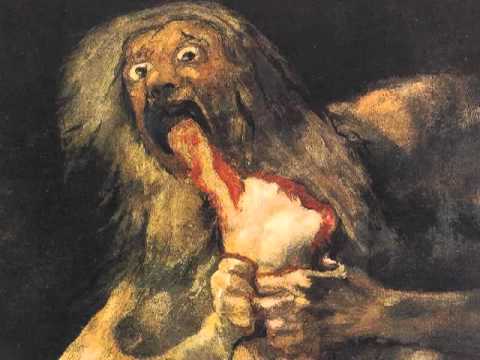
Image result for cronos painting
Growing up, I was always told Hell was a burning lake, a fiery pit, a bottomless maze of caves filled with demons and presided over by El Diablo himself who, when he wasn't busy writing rock lyrics or Young Adult novels, spent eternity presiding over the torture of souls who had passed from the mortal plane without enough marks in the good column. Anything bad you can think of - and boy did I ever think of it - it wasn't even one one hundredth as bad as what was actually happening to those poor suckers. Even Dante couldn't possibly describe the horrors and torments in their full nightmarish intensity (though maybe Clive Barker got closer). It wasn't necessarily under the earth, but down was the direction in which you went to get there. And once you were there, you weren't ever. Ever. coming out.

There's another narrative that says that Hell is actually here on Earth - that we've separated so far from God that we are experiencing that torment now, spiritually, without realizing it. That all the torments that we visit upon ourselves (and make no mistake, at this point all of human suffering is of humanity's own making) are not only the result of The Fall, but its wages as well - we don't have to wait for eternal punishment, it's already been brought to us by - well, us.

I have come to believe that Hell is actually not a place, but a time. And that time is 3:00 am.

3:00 am is where all of your worst fears and anxieties can climb right into your skull and shake you awake. It's when you come to believe with the full irresistible force of genuine epiphany, backed up by the immense weight of vast sheaves of admittedly biased but nonetheless very real evidence, that all is lost and it's your fault. You, and your family, and your home, and your finances, and your career, and your yard, and your relationships, and your reputation, and your future are all not only forfeit, but even of themselves evidence that you have set yourself up not for the success that you thought maybe you sometimes were enjoying, but for the inevitable fate of watching it all burn while your eyes are held open by the sheer refusal of sleep to visit you.

3:00 am is the dwelling of the specters. They take the forms and voices of all of those people you love. All of those whom you admire. All who trusted you because they Did Not Yet Know. At 3:00 am, they gather and look at you and shake their heads and whisper to each other "there is an example of what happens. We never thought it would come to this, but here it is. We tried to help but it was no good - it was probably hopeless all along. And the children, poor souls - we'll expect the same or worse from them, I suppose. What a pity. What a waste."

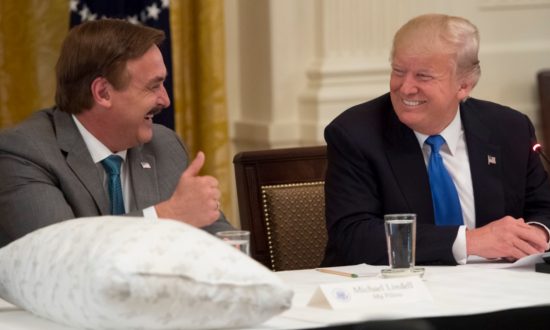
Like the more traditional versions, this Hell has no escape. Once you recognize that you have entered 3:00 am, you can't get out. Your eyes burn, but won't close. The tiny sounds of your home at night as it seems to slowly come down around you each snap and creak in your ears, threatening to be the harbingers of that final structural failure that Will Really Cost You. The peaceful sounds of the slumber of your partner seem like tiny taunts. Your neck and back urge you to change positions again and again in an effort to find the arrangement that does not introduce jagged, rusty spikes into them, but it's all in vain because your pillow was made by this man:
Image result for mike lindell
Which means it's not a pillow at all, but a loosely-packed sack of random foam pieces that came in a box with a printed Bible verse on a little slip of paper inside. At 3:00 am, you can hear this demon laughing at you for paying close to $40 to be tormented by this horrible excuse for bedding that makes you envy the hobo who gets to sleep on the ground with his head on his bindle.

Incidentally...
Related image

Of Course.  How could 3:00 am have it otherwise?

Now some might think that 3:00 am is escapable - just wait until it passes. It's temporal, and temporary, right? No, friends - when 3:00 am gets its hooks in you, it stays with you. You carry 3:00 am right the heck through 4:00, and into 5:00 (when it often pulls a Ramsay Bolton on you, letting you think it's allowed you to escape only to drag you back and flay the sleep right off of you 20 minutes later). You carry 3:00 am on your face, and in your stomach, and in your very soul through the whole rest of the next damn day. And tomorrow night? Have no doubt that 3:00 am will be ready for you with torments both fresh and familiar. 

In the beginning, when all was darkness until suddenly there was light, when the Earth made it's first rotation that brought one side into the light of the sun and turned the other to the void of space, 3:00 am was born. When humanity first fed of the apple that was the marking of time in hours, minutes and seconds, it gained its name. When it was decided that The Clock would become our constant liturgy, its canonical hours governing the activities of the pious and the virtuous, it gained its power. It has always been there, will always be there, waiting for us. And we, the tortured and damned who know its cruel embrace so well, will be there too.


Wednesday, April 10, 2019

An Open Letter to the Friends and Families of Parents with Neuro-Atypical Kids

Even if you don’t know it, this letter is written to you. Whoever you are, and whether or not you are aware of it, you almost certainly are related to or acquainted with someone who is affected by a brain that is different from most. This is just a handful of numbers that don’t even begin to capture the whole picture, but they are a start. 
  • Every year, about 42.5 million American adults - nearly 1 in 5 -  suffer from some mental illness, enduring conditions such as depression, bipolar disorder or schizophrenia. 
  • 9.4% of children aged 2-17 years have received an ADHD diagnosis. 
  • 7.4% of children aged 3-17 years have a diagnosed behavior problem. 
  • 7.1% of children aged 3-17 years have diagnosed anxiety. 
  • 3.2% of children aged 3-17 years have diagnosed depression. 
  • Each year, about 6,000 babies are born with Down syndrome, which is about 1 in every 700 babies born. Between 1979 and 2003, the number of babies born with Down syndrome increased by about 30%.
  • Among adolescents ages 18-19, just under eight percent of females and just under three percent of males identify as homosexual or bisexual. 
  • An estimated 0.7 percent of youth ages 13 to 17, or 150,000 youth, identify as transgender in the United States.
  • the CDC has increased its estimate of children with autism spectrum disorder to 1 in 59 children - over a 15% increase over the last two years.
Six degrees of Kevin Bacon has nothing on the likelihood that you are close to someone who is close to someone whose experience of being human differs from that of most people. Someone who is, in one or more ways, neuro-atypical.

I’d like to clarify a few terms first, at least in the way I’m using them. “Neuro-atypical” is not a euphemism or a code-word for “mentally ill,” “badly-behaved,” or just plain “fucked up.” It does tend to include and overlap with these categories (including the ones like the last that are nothing more than judgmental pigeonholes), but none of them really covers the gamut. There are lots of ways that people’s brains operate, contributing to temperaments, behaviors, cognitive patterns, and emotion states. The fact that only a narrow band of those are considered to correlate to success as it is typically defined doesn’t mean the others are strictly aberrant. A 7-foot neck makes for a lousy draft horse - but works pretty well if you’re a giraffe. 

“Kids” means anyone who we are raising or have raised. Natural born, trans-generational, or adopted. Toddler through young adult and even adult. Living at home, on their own, or in a facility. For many of us, the idea of our children “leaving the nest” is far from a predictable proposition or a forgone conclusion. Even if and when they do forge out on their own, we may never be able to fully surrender our role as caretaker. Some of us may, indeed many of us will - but it won’t be on the standard timetable and won’t follow the usual script.

Our kids are not “broken,” or “problems.” They don’t need to be fixed, or corrected. They do need to be understood, reached, and connected to purpose so they can do what they are capable of - which is not less valuable than anyone else’s capability. Our aim is not to re-make them or force them to conform - it is to empower them and allow them to flourish. Everyone who has ever changed the world has done so not because they were a perfect fit for the world, but because the world did not fit them.

Here are a few things that we, as parents of these kids, need you to know. We are grateful for your support and your empathy, and most of all for your love and care. It is necessary to honor that with honesty and directness, so that we all can understand and value one another as we should. 

Some of this will make you feel badly - angry, possibly hurt, maybe insulted on some level. We understand, and we are sorry - but these things are true, and we need you to understand. 

We recognize that you have your own valid emotions including fears, doubts, and pain, and that you need and deserve to be able to discuss, share, vent, and process these feelings with someone. We cannot help you with this. Please turn to someone else in your support network. If you see a therapist yourself, that’s a great choice. If you have a close friend, a pastor/priest/rabbi/imam, or another family member, those are also excellent choices. Support groups exist too - but please don’t come to ours unless you check with us first.

We are not at a loss for doubts, fears, catastrophic predictions, second-guesses, or future-trips. We have spent huge parts of our lives wondering what we did or didn’t do, what we might’ve done differently, how we could/should have headed “this problem off early.” We constantly fight - hard - to keep these dragons at bay. Please do not feed them for us. 

Please don’t tell us what you’ve heard works for other kids, typical or otherwise, and suggest we try that. We're not stubborn or unwilling to accept advice - many of us have the benefit of working with professionals who have devoted their careers to understanding and helping these kids. Every one of these kids is different, and needs different things. Paraphrasing Tolstoy, “typical people are all alike; every atypical person is atypical in their own way.” Standard approaches work well for most people because that is the definition of typical - true to type. Those things fail for the atypical for the same reason.

(Oh, and specifically for previous generations. Please do not remind us how we were raised, and how “we turned out okay,” suggesting that we do things the same way. We’ve tried it. It didn’t work. Those parents who say they now feel sympathy over what they put their own parents through? We are not those people. We wish our kids acted “just like we did.”  You had it easy.)

By contrast, this will not be easy for you, us, or them. There will be setbacks and rough patches. Bad days and very bad days. Bad weeks. Months. Years even. How many? A few. A lot. We don’t know. How bad? a little bad, really bad, unimaginably bad? Yes, probably all of these. It will happen. At no point will all of it be in the past. We have to accept that, and so do you.

Okay, you’ve gotten through the hard part. Thank you. Take a deep breath. This part gets better.

Our kids are special. They are different. They bring things to the world that typical people don’t. They see things differently. They can offer us new perspectives and augment our understanding in ways we would otherwise miss. Not all of what they bring will be valuable to us (though it will to them), but if ever a world was changing fast enough to need a lot of difference and divergence of perspective, it’s now.

Listen to us when we tell you things. That’s all you have to do - we are not bringing you a problem to solve, we just need you to see where we are and what we and they are going through. You don’t have to shoulder our weights for us, just remind us that we have the strength and the wisdom to carry them - because we do, we just sometimes need reminding of it.

There will be victories. We invite you to celebrate them with us. Every time they surprise us with their talents, unique insights, or glimpses of beauty, join us in taking part in their joy. As much as these kids challenge us, their good moments shine all the brighter and warmer. There will be good days, and very good days, and amazing days. A few, a lot maybe - far between or in great wonderful streaks. They will always be in front of us. Trust us, we will notice these moments - when we tell you about them, share our happiness, and look forward to the next one in the times between.

The future will be a surprise. We can’t fully prepare for it, and certainly can’t predict it. But it will not be routine or boring. We are learning to be curious about that future, rather than fearful. Watch for it with us, and be ready for something none of us expects - not even them. We get the privilege of helping these kids usher in a new future. Share it with us - we welcome you.


We need you with us on this. We want you on our team. Many doors are open, even if some are closed. It’s a worthwhile journey, and one that few have the privilege of taking. Like any privilege, it is also a weight - but it’s not a burden. Join us as we learn to be grateful for the journey even as it changes us, changes them, and maybe changes the world. 

Tuesday, March 26, 2019

Secret Word

 Publication date edited to reflect date of actual writing. Posted much later on 6/24/2022. Also believed to be incomplete.

Remember the show “Pee-Wee’s Playhouse?” Remember the “Secret Word?” Whenever someone said it, the room went all crazy and everyone danced around and laughed and probably more than a few people watching at home had panic attacks or seizures? 

Imagine if there were no big party that happened when you said the secret word. Instead, anytime someone thought you were supposed to say the secret word, and you didn’t, you got an electric shock, or someone flicked your ear from behind, or poked you in they eye. Or someone else paid for it instead of you.

Sometimes, that’s how my job feels.

My biggest fear, professionally and maybe even personally, isn’t finding out that I’m not as smart or as talented as I thought I was. I am actually okay with that. Many if not all of my leisure pursuits actually involve finding and tripping over the limits of my abilities - and then trying it again. Popped off the wall and hit the mat on that v4 boulder problem? Try some different moves. Blew the exposure on that nudibranch photo at 75 feet underwater? Pay attention to your aperture next time. No problem. Back in you go.

What I am constantly worried about is that I won’t be as smart or as talented as someone else thought I was. Got hired because the CEO really enjoyed talking to you and thought you were brilliant? Turned out your particular brand of brilliance runs as hot and cold as your pool game? Damn. Now you suck. And it cost people. 


Thursday, March 14, 2019

Why I Don't Write

I believe strongly in the power of writing. Arranging one's thoughts to emerge through the pen or keyboard changes them, and causes the writer to actually examine them and, often in so doing, refine them. If you’re exceptionally fortunate, they do something for a reader as well.

The act of writing engages my inner critic. I compulsively backspace and re-type sentences, often multiple times. It takes me forever to get to a thought - much less through a thought - often to the point that it escapes into the ether as thoughts do before I get to a point. By now, this is already becoming self-evident.

Writing requires time, of which I have little, discipline, of which I have less, and a certain arrogance that people should know what is in your head (of which I have plenty, but it’s too busy fighting with the opposing self-doubt to be bothered to generate any motivation). 

See? See why I don’t write?

There’s a deeper reason though. The writing I want to do would create a great deal of vulnerability. The writing I find most valuable from others is that which exposes the core of their humanness - that thing we all share, that ultimately connects us. To share our fears, pains, and failures alongside our victories and glittering moments of joy with others is to connect ourselves and our readers to a truth that is both inescapable and profoundly hopeful - and can kindle deep gratitude for the privilege of experiencing even the adversities we face in our lives. 

I would like to write these kinds of things. Okay, but….

Truth is connection, and connection is truth. Connection involves others. My vulnerabilities are connected to those of others. To tell a meaningful truth makes the teller vulnerable, surely - but it also makes vulnerable those to whom the story connects. I don’t know how to tell my truth without exposing those I care about, and I haven’t got the right to do that without their permission - or maybe even with it.

Shrouding it in fiction depersonalizes it, and in some ways shields the writer from accountability. Attempts to preserve anonymity are paradoxically flawed - anyone to whom the truth would matter will probably figure out the person involved, and to anyone who wouldn’t figure it out even the name would be effectively anonymous.  

Ultimately, I don’t write because I’m the king of excuses - and I know that. This is, in fact, basically one long excuse that I’ve written. And now my brief window of time is closing, and with it this piece of what is certainly not writing. 


Because I do not write. 

Tuesday, August 7, 2018

I do not want my job today

Today I want my job to be breaking things. I want to tear down walls with hammers. Break windows, crush rocks with a sledgehammer. Tear apart fences with my hands.

I do not want to energize my colleagues. I do not want to build alignment with my team and my clients. I definitely do not want to create insightful strategies for customer engagement.

I want work that leaves my muscles sore, and my hands bloodied and broken. Work that flows from fire and rage, that creates clearings where other people can go build things. I want to sweat and move. I want to demolish.

I do not want to plan and worry. I do not want to think things all the way through. I do not want to reframe anybody's problem.

I don't want to go home and feel like I've made a difference, no matter how small. I do not want the satisfaction of helping unlock the potential in a business or product. I do not want to relax will a well-earned glass of wine.

I want to go home exhausted and aching, barely able to move. I want to fall/crawl into bed feeling near death, with the sweat and grime of violent, angry work still clinging to my skin. I want to drop into sleep during the fall, with nothing to reflect on and nothing to plan.

That is what I want today.

Tuesday, July 10, 2018

Let Me Tell You About This Dream I Had...

Publication date edited to reflect time of actual writing. Posted much later on 6/24/2022.
 
Wow - am I really doing this? Okay, yes. I’m doing this. 

I had a dream last night (wait, sit back down…sit…) that kept me awake the rest of the night. Now I am not typically the type to give much attention to dreams - I’m not someone who believes in crystal healing, or Astrology, or messages from beyond the physical plane, or most supernatural stuff (I eat it up as fiction, though). So the fact that a dream actually affected me the way it did is itself unusual. We’ll get back to that though.

I do however, have a somewhat complicated relationship with the idea of God. I grew up in a pretty religious family, went to church and Sunday school, went to confirmation at 13, took communion until I was about 25. In my adult life though, I have for the most part lost any real belief in a personal entity that goes by the name of “God.” But old reflexes die hard, and occasionally I still do a kind of praying, if you can really call it that - it usually starts with “Hey, I know that if you are there I’m the last person who should be asking for things, but just in case…” So after another day that had me in a pretty conflicted place with respect to the work I do, and after a workout class which left me so lightheaded that I could barely stand, while trying to catch my breath I reached out silently to my whatever-might-be-listening-but-probably-isn’t version of a higher power and asked for one of two things - inspiration for the infuriating powerpoint slides I needed to create, or direction on what I should be doing instead of creating infuriating powerpoint slides. Then I went home, ate a pork chop, read a chapter of a novel about a menacing other dimension that is encroaching on our own (see? what did I say?), and went to sleep.

So the dream (sit…siiiiit back down…sit…) The first thing I remember was that I was supposed to be giving some kind of talk or running a workshop (probably involving infuriating powerpoint slides) that for some reason was going to take place in a church. No significance there necessarily - my kid’s piano recitals used to take place in one. The group was assembling outside, but there was a problem - the actual congregation was already in there, and waiting for a service. Which for some reason I was going to deliver. Now how I was going to handle two events at once, both of which expected to use the same space and one of which was distinctly outside my wheelhouse, was causing my dream-self some pretty heavy anxiety. In the back of my mind I was thinking “well, maybe we can move the workshop to the other building…but then how am I going to be in both places…? damn damn damn…” In that weird advancing-without-logic way that dreams have, the next thing I was doing was, well, giving the sermon to the congregation (all the while aware that the workshop group was waiting outside the sanctuary). The first thing I find myself doing is showing a video of Mickey Mouse - the sorcerer’s apprentice version - channeling “winning energy” into the Los Angeles Chargers (who were a basketball team in my dream - not really a sports fan). It’s wearing him out - he’s got guys holding him up, and lightning is flying out of his fingers into the team. Somehow the point is that he’s a conduit blah blah doesn’t matter because the congregation is eating it up. They love this! It’s Mickey Freakin’ Mouse, and they are going bonkers. 

My dream-self is now conflicted because clearly this is what this crowd needs and wants - someone to channel blessings/power/what-have-you into them. I of course don’t really believe in this, even in my dream…but it seems to be what’s needed. So I see this little girl, like 3 years old, and tell everyone that SHE is going to bless them all. I realize that at some point the workshop folks have joined the congregation, and they too are totally going with it. The little girl is psyched, because she’s the center of all this excitement. I’m thinking “well, if this is what they need…I’ll give it to them.” 

Apparently things went well, because the next thing I know I’m walking away from the church feeling pretty good about things. I’m walking across this field that has some sort of sitting area at the other end, and there’s this older (late 50’s?), heavy-set woman all in black sitting there, looking disapproving but with that kind of “okay, you pulled a fast one - but it’s the last one” kind of smirk. She says she’s from some government oversight agency that had a name I can’t remember but certainly doesn’t exist, and tells me I won’t be doing that again. “What’s the problem?” I ask, “We were just having a meeting.” “Well, from now on you can only meet for one minute, and can’t talk about any of that stuff” “I think we can, and will - we’ll talk about whatever we want!” “Oh really?”

And then I woke up feeling like a conversation had just been interrupted. A conversation I wanted to continue, but don’t know how.


Tuesday, March 6, 2018

The Mudville Odyssey

Something like 25 years ago, in what I think was probably 1993, I had a rare treat of a conversation with a friend. I think it was 1993 because I somehow recall that we both had beers at the table, and that would have been the year we both turned 21. My friend Geoff and I were both back in our hometown of Clayton, CA for the summer. We were sitting on the patio at what was at the time a place called "Mudville Grill" in what is now "the old downtown."

We talked about where people were from our high school graduating class - who had gone away to college and where, who was still there in town just working a local job, who had already disappeared entirely. At some point, we shifted to the nature of humans in groups, and specifically corporations. I had a model in my mind that cast the corporation as a living entity. To me, it did all of the things that organisms do - it grew, acted to protect itself, and tried it's best to survive and reproduce. Geoff was pretty unconvinced by any of it, believing as I recall that it was actually just the individuals acting in those ways that created the appearance of a real living thing.

We bounced around on the topic for a good couple of hours before moving on to I-don't-remember-what, but the way that one topic had fully occupied and engaged our admittedly young and pretty naive minds has stuck with me ever since. Neither of us had any background whatsoever in organizational psychology, or sociology, or any other thing that might have lent credibility to the discussion. The fact that, in recent years, the debate on whether corporations should be treated not just as living things, but as people - the living things to which we accord all the highest rights and privileges (well, some of them, some of the time) says nothing about any wisdom or knowledge that fed the conversation - there certainly was none on my part. But it stayed with me - and maybe with Geoff too.

I feel at times as though I've been trying to get back to that place of ideas ever since - conversations that stretch minds, that break brains a little and then reassemble them in a way that is able to contain this new thing that it couldn't before. Conversations that are unafraid to go to places that don't feel safe, and that perhaps the participants are not "qualified" to go. Spaces in time, place, and mind that aren't cluttered with expectations or appearances of expertise. Places of play. Places of discovery. Exciting and even dangerous places.

Where are those conversations now? How do we have them? How do we connect to that place? All of this technology that has promised it has delivered mostly frivolous, gratuitous, and deadening self-reference - the opposite of the space I'm describing. Face to face, most of us are either too afraid, or too distracted, or too caught up in what we all like to call "busy-ness" to allow these spaces to form. We get together to "catch up" - but we don't connect with any real depth. We voyeuristically listen to podcasts and talk shows to hear other people connect, their conversations having become more entertaining to us than our own. We are treating the resource of thought the same way we treat our other natural resources - what has been built up over millions of years must be consumed and turned to profit as quickly as possible, without ever putting anything back.

And we wonder why we are becoming intellectually lazy. We wonder why we've become so polarized, politically and socially. And we don't seem to notice that the quality of what we're consuming is diminishing as it becomes more and more a set of monocultures that we choose off of a menu of available options. We tie together ideas, values, and feelings into monolithic rafts - liberal, conservative, democrat, republican - and then spend all of our energy trying to keep our chosen craft afloat and sink any others. We look to cultural icons and personalities that have the appearance of greater qualifications or insight - who ultimately lead us to consolidate further, because that is how they keep THEIR rafts afloat.

We don't need to choose this. We each have the capacity to evolve the culture, to challenge our own minds and beliefs. We can find the courage to let our rafts float if they will - or sink, at which point we will build a new raft, or climb onto a more seaworthy one.  Or learn to swim, for pete's sake.

We can get back to Mudville. We can rediscover our capacity for thought and conversation. We can get off the wheel of polarization and division. All it takes is a bit of courage and humility, and a willingness to be vulnerable while being passionate. And we ALL can do that - we don't need to wait for a new captain to arrive while we continue to bail out our leaky boats. We have everything we need.


Wednesday, December 7, 2016

Lunchtime - a piece of microfiction

"Dude, we're going to Fish Donuts - you wanna come?"

What was most surprising was that Dale looked almost happy about the prospect, even using the pejorative moniker in an almost favorable way.  All you really need to know is that 'Fish Donuts' is nicknamed after the flavor of a plate of lemon chicken - for which neither of the two terms should be thought of as complimentary.

"No - you go on ahead."